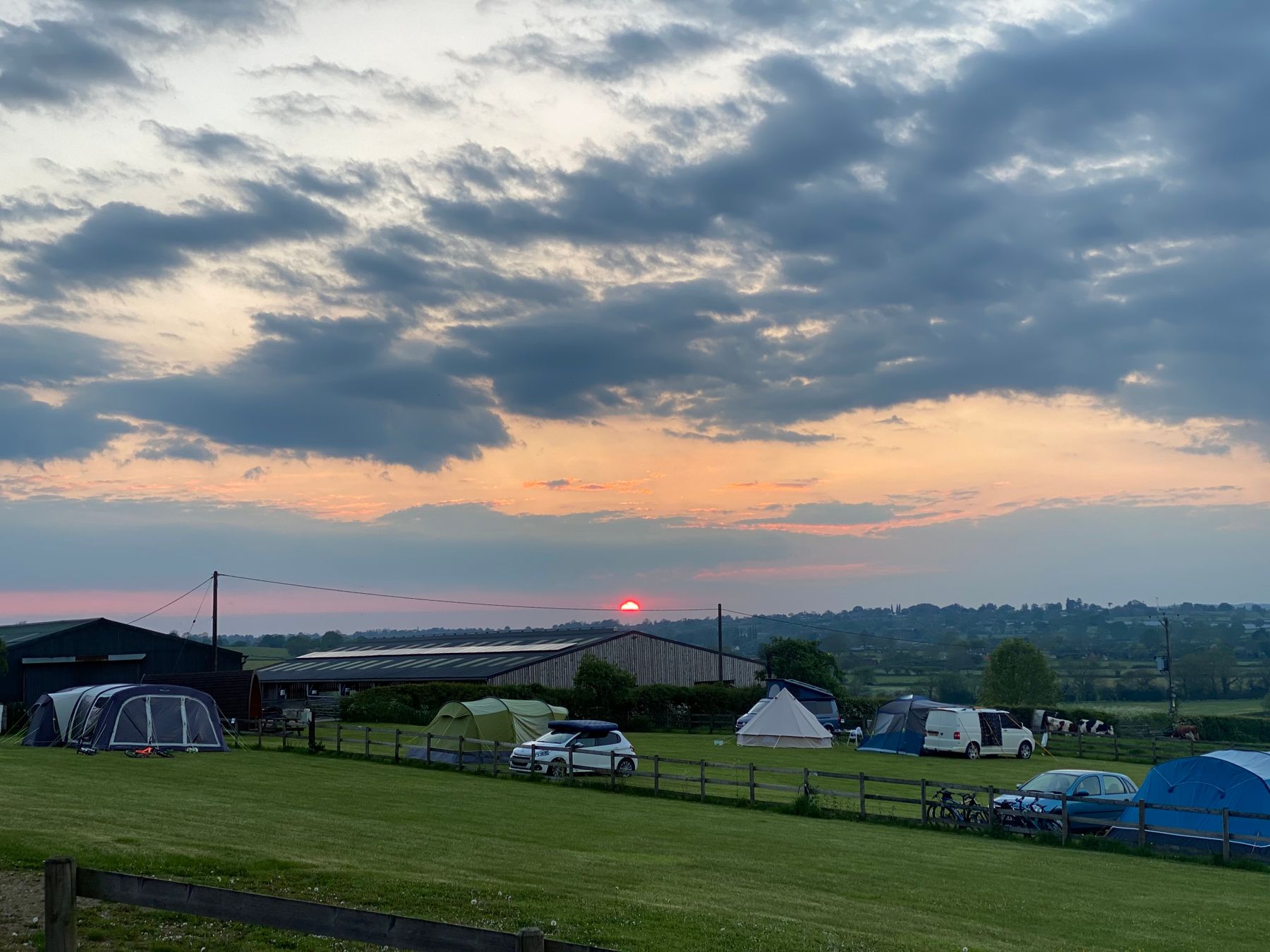
A 15-pitch temporary campsite at Scarside Farm, near Penrith in the Lake District, ran its full 59 days this summer — 17 July to 13 September — and came down exactly as planned, with nothing left on the ground.
After three refusals on this page this month for missing paperwork, here is the other side of it: what an application actually has to show when the site sits on sensitive land.
What got it approved without a single condition
Councils attach conditions when they are managing a risk they are not confident the applicant has dealt with. An approval with no conditions attached is a fairly direct signal that the application had already answered the questions. In this case:
- No permanent infrastructure. Nothing that needed foundations, nothing that would still be there in October. Genuinely temporary, rather than temporary in name.
- Pitches kept away from watercourses and species-rich meadow. Not a promise to be careful — a layout that put the pitches somewhere else. In the Lake District this is usually the point an application lives or dies on.
- Toilet waste taken off-site. Removed and disposed of properly rather than dealt with on the land.
- Greywater in sealed tanks, not discharged to the ground. Washing-up water is the quiet failure in a lot of temporary site applications — it is easy to overlook and it goes straight into whatever is downhill.
- Lighting kept to a minimum, or not used at all. Dark-sky and landscape-character considerations carry real weight in a National Park, and volunteering the restriction is worth more than having it imposed.
The pattern underneath
Read those five together and there is a single principle running through them: every one is a point where the applicant anticipated the objection and designed it out, rather than proposing something and offering to mitigate it afterwards.
That is the practical difference between the approvals and the refusals. A refusal usually reads as "the applicant did not demonstrate that..."; this approval reads as a layout and a method statement in which there was nothing left to demonstrate.
Where the 28 and 60-day rules sit
Temporary campsite permitted development rights differ across the UK, and it is worth being precise about which set applies to you.
In England, the familiar 28-day right was temporarily extended to 56 days during the pandemic and has since returned to 28 days, with the caveat that specific sites, prior approvals and local circumstances vary — a 59-day season is not something the standard English right gives you on its own, and this site went through a planning route rather than relying on permitted development.
In Wales, from 1 September, landowners can run a temporary campsite for up to 60 days a year without full planning permission — double the old 28-day limit — though the extra days cover tents, campervans and motorhomes rather than touring caravans, and you have to notify the council before opening. We have written that up separately in what actually changed in Wales.
If you are planning around day counts, check which regime applies and whether your particular site has conditions that override the default. Assuming the headline number applies to you is how a season ends early.
What to take from it
If you are putting a temporary site in front of a council, the Scarside application is a useful shape to copy:
- Show where the sensitive features are, and show the pitches somewhere else.
- Say exactly where the waste goes — both kinds.
- Volunteer the lighting restriction before anyone asks for it.
- State the dates, and state what the field looks like the day after.
Then do what you said. This one came down on schedule with nothing left on the ground, which is the part that makes next year's application a much shorter conversation.