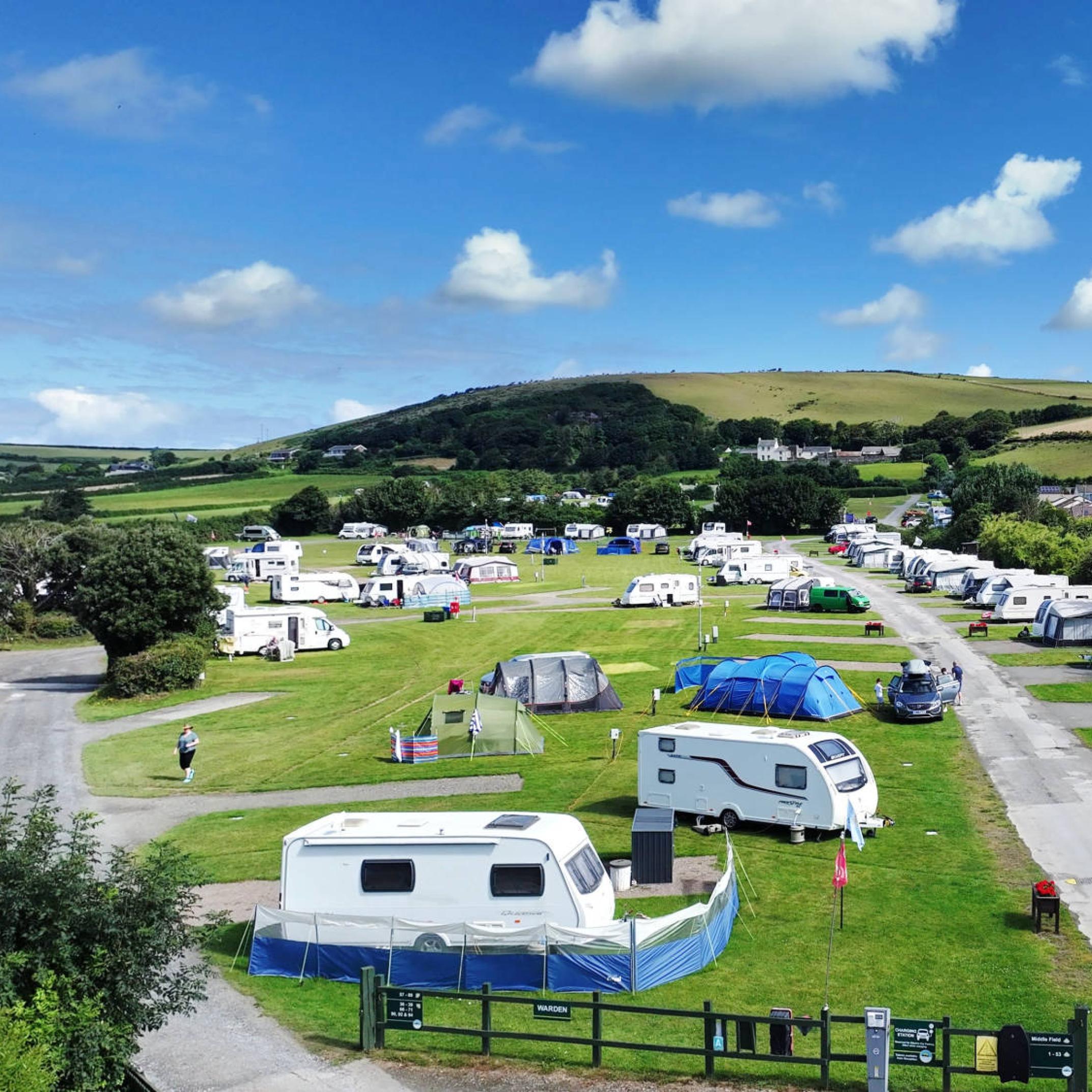
Rainbolts Hill Farm, near Roch in Pembrokeshire, has run as a seasonal campsite since 1972. Up to 50 pitches, April to October, more than fifty years of trading. Its owners applied to Pembrokeshire Coast National Park Authority for a certificate of lawful use — the formal confirmation that a site can keep operating without full planning permission because it's been doing so, unchallenged, for at least ten years. On 5 September 2026, the National Park refused it.
Not because the site is a problem. Not because of noise, access or drainage — the objections that usually sink a fresh application. It was refused because the owners couldn't prove the ten years. The officer's report put it plainly: "a satisfactory case has not been made to support the overall contention that the site is in lawful use as described." Fifty years of running the place wasn't, on its own, evidence that fifty years of running the place had happened.
A different mistake to the one you've heard about
If you followed the planning story out of Gwynedd earlier this month — a touring-pitch extension refused over a missing flood-risk assessment — this looks like the same lesson twice. It isn't. That was a fresh application undone by a missing technical document. This is an existing, long-running site undone by a missing paper trail. Different failure, same result: a planning committee that can only decide on what's actually in front of it.
A certificate of lawful use under section 191 of the Town and Country Planning Act 1990 doesn't ask whether your site should be allowed to operate. It asks whether it already has been, continuously, without a break, for the qualifying period — normally ten years for a change of use. The burden of proof sits with the applicant, and "on the balance of probability" is the test, but balance of probability still means evidence a planning officer can weigh, not a recollection a planning officer has to take on trust.
What actually counts as proof
Councils that grant these certificates are typically looking for a run of dated material that doesn't have obvious gaps:
- Booking records — who stayed, when, for how long, ideally spanning every year of the claimed period
- Invoices and bank statements showing pitch income arriving regularly across the years, not in occasional bursts
- Correspondence with the council itself — building consent for a facilities block, business rates registration, environmental health visits, anything with an official date stamp on it
- Dated photographs showing the site in active use across different years
- Utility accounts and supplier invoices tied to the site's operation
A site can genuinely have traded continuously for decades and still fail to produce this. Paper records get lost in a house move, a bookkeeper retires, a filing cabinet gets cleared out. The site not being able to prove it operated is a different fact from the site not having operated — but planning law only has room to act on the first one.
The unglamorous fix
If your park, or part of it, has ever operated on anything less than a fully clean planning history, the moment to start building that evidence file is now, not when a certificate application is already in front of a committee. Keep booking and payment records indefinitely, not just for the tax years HMRC requires. Photograph the site each season. File council correspondence somewhere it won't get thrown out with old paperwork.
It's also the quiet argument for running bookings through software rather than a paper diary or a spreadsheet that gets overwritten each year: every booking lands with its own timestamp, and a full history sits in one place rather than in whichever box survived the last office clear-out. That's not why anyone sets up a booking system — but ten years from now, if a certificate of lawful use is ever the question, it's the difference between an afternoon pulling a report and a case built on memory.
Rainbolts Hill Farm can appeal the refusal or reapply with stronger evidence. Either way, the site itself was never the issue. The file was.